
The GLP-1 class explained: how semaglutide, tirzepatide, and retatrutide differ
Semaglutide, tirzepatide, and retatrutide share a pharmacology family but each activates different metabolic receptors. Here's what the difference actually means.
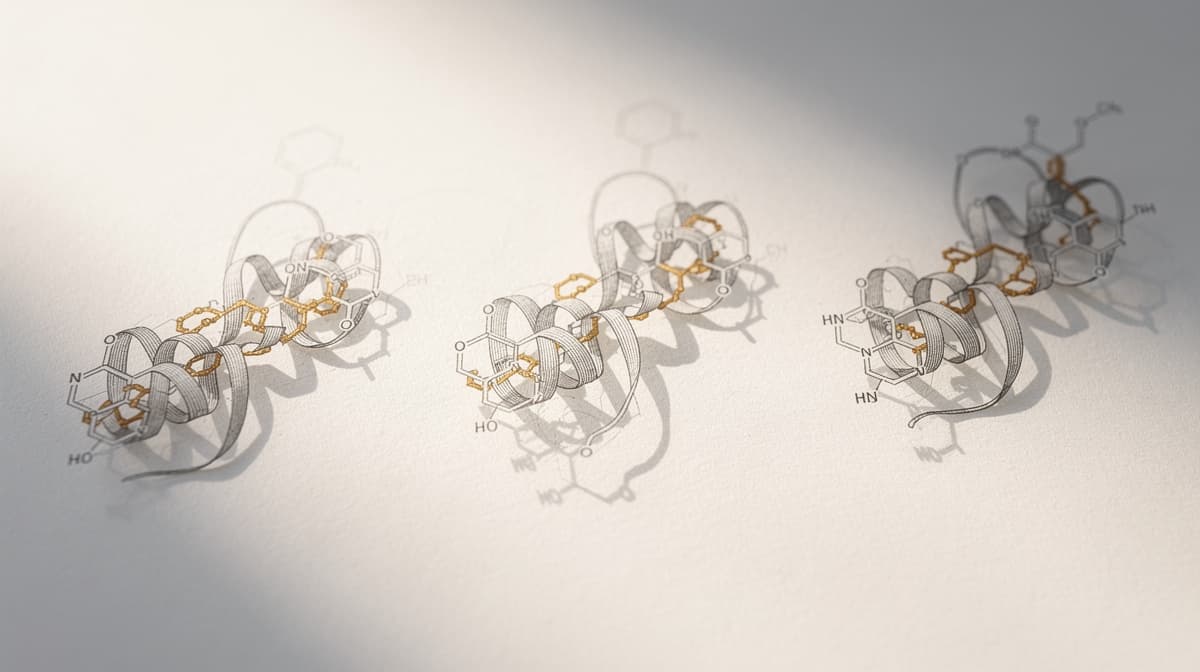
The GLP-1 conversation in 2026 is really three conversations. Semaglutide activates one receptor. Tirzepatide activates two. Retatrutide activates three. Each step up the receptor count comes with larger weight-loss effects and a different safety trade-off. Understanding the class means understanding those receptors.
The incretin system, in one paragraph#
The human gut secretes two primary incretin hormones after meals: GLP-1 and GIP. Both stimulate pancreatic insulin release in response to glucose, which is why they're called incretins (INcretin = INtestinal seCRETion of INsulin). A third hormone, glucagon, is secreted by pancreatic alpha cells and opposes insulin — it raises blood glucose and mobilises stored energy. In healthy metabolism, these three signals are tightly coordinated. In obesity and type-2 diabetes, the coordination degrades. The GLP-1 class of drugs is engineered to restore or amplify incretin signalling pharmacologically.
What GLP-1 activation does (and what semaglutide does)#

Native GLP-1 has a half-life of under two minutes. It's broken down almost immediately by dipeptidyl peptidase-4 (DPP-4). Semaglutide is engineered with modifications that resist DPP-4 degradation, extending the half-life to about one week. The biological effect at each receptor is GLP-1's natural effect, just sustained:
- Appetite suppression: GLP-1 receptors in the hypothalamus and brainstem signal satiety. Patients on semaglutide routinely report feeling full on smaller meals.
- Slowed gastric emptying: Food sits in the stomach longer, which extends satiety and blunts post-meal glucose spikes.
- Glucose-dependent insulin release: Insulin secretion is stimulated when glucose is high and left alone when glucose is normal. This is why GLP-1 agonists carry lower hypoglycaemia risk than sulfonylureas.
In the STEP 1 obesity trial, semaglutide 2.4 mg weekly produced 14.9% mean body-weight reduction at 68 weeks. FDA-approved as Wegovy for obesity and Ozempic for type-2 diabetes. Approved by the EMA and Legemiddelverket in Norway under the same brand names.
What GIP adds (and what tirzepatide does)#
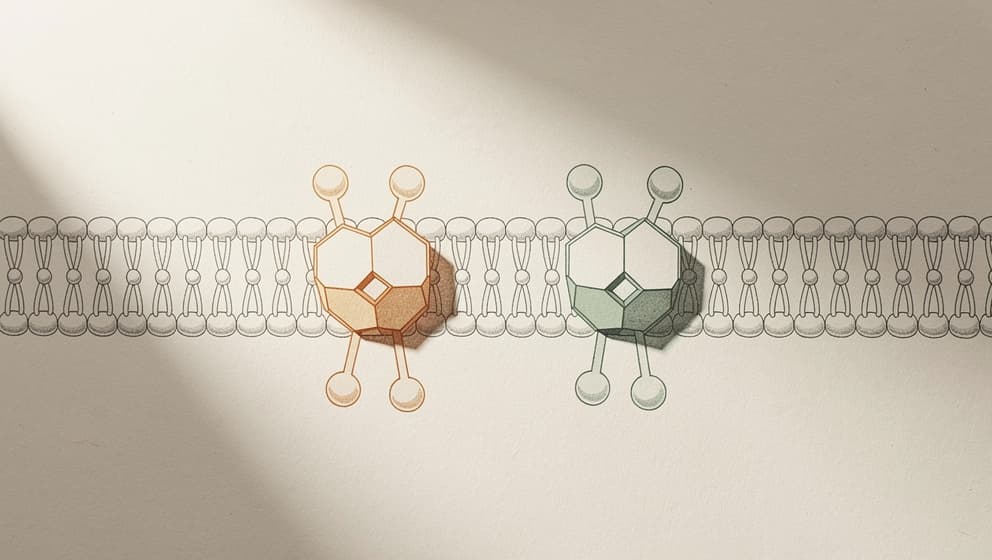
GIP is the other incretin. Its biology is subtler than GLP-1. In addition to augmenting insulin release, GIP has effects on adipose tissue and appears to modulate energy balance through mechanisms that are still being characterised. In isolation, GIP agonism is a weak weight-loss signal. In combination with GLP-1 agonism, the combination outperforms either alone — a synergy that clinical trials have confirmed rather than predicted.
Tirzepatide is engineered as a single 39-amino-acid peptide that activates both GIP and GLP-1 receptors. Like semaglutide, it's modified for a long half-life and weekly dosing.
In SURMOUNT-1, tirzepatide 15 mg weekly produced approximately 22.5% mean body-weight reduction at 72 weeks in adults with obesity — a ~50% larger effect than semaglutide at equivalent timepoints. A head-to-head NEJM trial in 2025 directly compared the two drugs and confirmed tirzepatide's advantage: -20.2% with tirzepatide vs -13.7% with semaglutide at 72 weeks.
The side-effect profile is similar to semaglutide: gastrointestinal events (nausea, vomiting, diarrhoea, constipation) dominate, particularly during dose escalation. Tirzepatide is FDA-approved as Zepbound for obesity and Mounjaro for type-2 diabetes. EMA-approved under the same names. Not yet reimbursed for obesity indication under Norwegian health coverage.
What glucagon agonism adds (and what retatrutide does)#
Adding glucagon to the mix is counter-intuitive. Glucagon raises blood glucose — the opposite of what obesity pharmacotherapy aims at. The rationale is that in a carefully balanced triple agonist, glucagon's other effects come forward: increased resting energy expenditure, hepatic fat mobilisation, and lipolysis. The GLP-1 and GIP components manage the glucose side; glucagon takes the weight-loss ceiling higher.
Retatrutide is the first molecule to engineer this triple activation into a single 39-amino-acid peptide. In Phase 3 TRIUMPH-4 (December 2025), the 12 mg dose produced 28.7% mean body-weight reduction at 68 weeks, with 58.6% of participants losing at least 25% of body weight — the largest result ever reported in an obesity Phase 3 trial.
The price of that efficacy is a distinct safety profile. Dysesthesia (altered skin sensation) occurred in 20.9% of patients at the 12 mg dose versus 0.7% on placebo — a signal specifically linked to glucagon-receptor activity. Discontinuation because of adverse events was 18.2% at 12 mg, well above the 4% on placebo.
Retatrutide is not FDA-, EMA-, or Legemiddelverket-approved as of April 2026. Lilly's remaining Phase 3 trials are expected to read out through 2026. For the full breakdown, see the retatrutide guide.
Side-by-side: the numbers that matter#

| Drug | Receptors activated | Max dose | Weight loss | Timepoint | Approval status (April 2026) |
|---|---|---|---|---|---|
| Semaglutide | GLP-1 | 2.4 mg weekly | 14.9% | 68 weeks (STEP 1) | FDA + EMA + NO (approved) |
| Tirzepatide | GLP-1 + GIP | 15 mg weekly | 22.5% | 72 weeks (SURMOUNT-1) | FDA + EMA + NO (approved) |
| Retatrutide | GLP-1 + GIP + glucagon | 12 mg weekly | 28.7% | 68 weeks (TRIUMPH-4) | Not approved anywhere |
The pattern: each additional receptor is worth roughly 5–7 percentage points of additional weight loss, paired with a different side-effect signature. Semaglutide and tirzepatide share a gastrointestinal profile. Retatrutide adds dysesthesia and a modest heart-rate increase.
Beyond weight loss: T2D, MASLD, and cardiovascular outcomes#
The GLP-1 class is not only about weight. Each molecule has an expanding evidence base in adjacent indications:
- Type-2 diabetes: All three have strong efficacy on HbA1c reduction. Semaglutide and tirzepatide are approved; retatrutide's Phase 3 TRANSCEND-T2D-1 reported out in March 2026.
- MASLD (metabolic dysfunction-associated steatotic liver disease): Semaglutide and retatrutide have both shown liver-fat reductions in dedicated trials.
- Cardiovascular outcomes: Semaglutide's SELECT trial established cardiovascular benefit in the obese-non-diabetic population. Tirzepatide cardiovascular outcomes trials are enrolling. Retatrutide's cardiovascular programme is also active.
The class is maturing into broadly metabolic therapy, not a narrow weight-loss class.
Practical takeaways for protocol design#
Three heuristics emerge from the class data:
- Receptor count correlates with efficacy and with side-effect burden. More receptors engaged means more weight loss and more tolerability risk. The right choice depends on the individual's goal, their tolerance for side effects, and their baseline metabolic profile.
- Titration is class-wide. Every approved GLP-1 has a mandatory dose-escalation schedule. Starting at target dose is the fastest path to discontinuation. The Klarovel titration calculator builds the week-by-week schedule for any approved GLP-1.
- Bloodwork first. HbA1c, comprehensive metabolic panel, and baseline lipids are the minimum before starting any GLP-1. Thyroid function (TSH) is part of the screening too, given the class-level MTC contraindication. Klarovel's questionnaire enforces this intake.
For the individual drug breakdowns, see: semaglutide guide, tirzepatide guide, retatrutide guide, and the semaglutide vs tirzepatide head-to-head comparison.
The GLP-1 class is the most important pharmacology story in metabolic medicine right now. Understanding the receptor differences is the difference between reading labels and understanding what you're reading.
Keep reading
Selank Peptide: Russian-Approved, Not FDA-Authorized
Selank peptide is a Russian-approved anxiolytic that modulates GABA-A and enkephalins. The mechanism, the 62-patient trial, and 2026 regulatory reality.

Semax Peptide: Approved in Russia, Unscheduled in the US
Semax peptide is a Russian-approved nootropic that raises BDNF and shows neuroprotective effects after stroke. The science and the 2026 regulatory reality.

Are peptides legal in Norway? The 2026 regulatory answer
Peptides in Norway are mostly unlawful to import privately. What Legemiddelverket stops at customs, what's approved, and how Norwegian law handles it.